
Did you know that there are two different types of dental restorations your dentist can use to restore teeth affected by damage or decay? They are known as direct or indirect restorations. Although both types of restorations will restore the look and function of the affected tooth, they will do so in different ways. Ultimately, the type of restoration that is best for you will depend on a number of factors such as the type, extent, and location of the damage or decay.
Direct restorations are those that can be entirely fabricated and completed inside the mouth and do not require the use of a dental laboratory. Since they can be completed without the use of a dental laboratory, they can usually be completed during a single dental appointment and don’t require the use of a provisional, or temporary restoration.
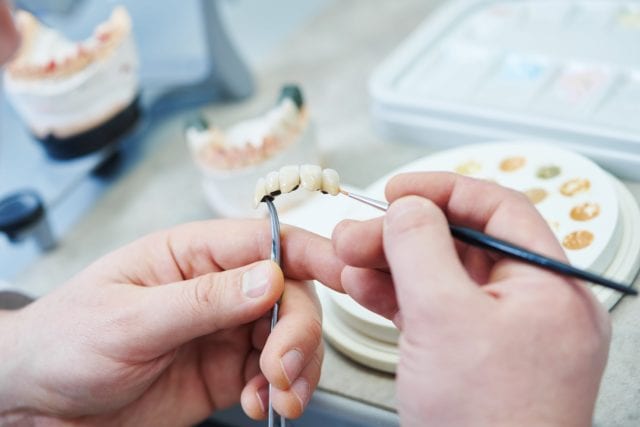
Indirect restorations are those that cannot be fabricated inside the mouth and instead must be fabricated outside of the mouth before being placed on the affected tooth. Some examples include crowns, bridges, dental implants, inlays, onlays, and veneers. These restorations can be fabricated by a dental laboratory or an in-office milling machine, if your dentist has one. In cases where a dental lab is used, there are usually two dental appointments required to place an indirect restoration.
